
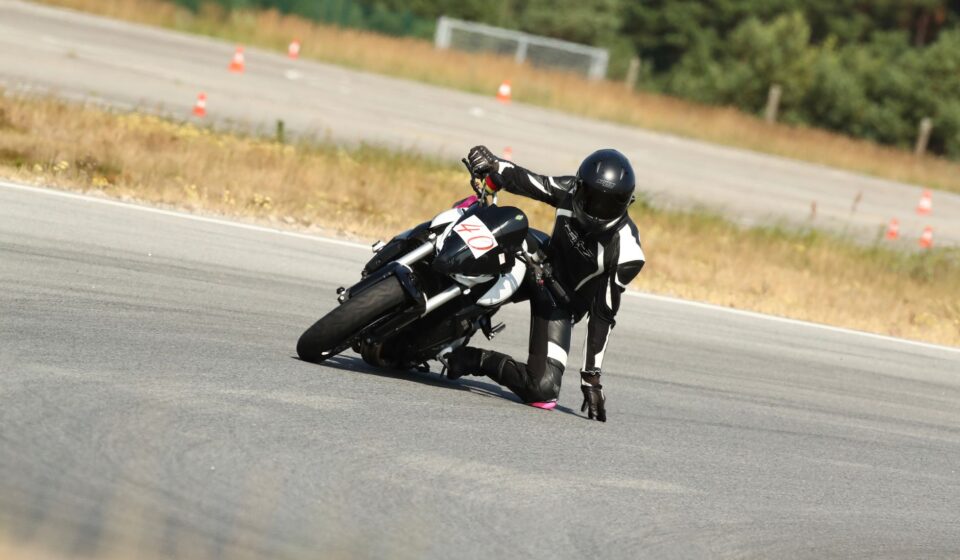

Mastering Motorcycle low speed control tips is not just about showing off; it’s a fundamental skill that significantly enhances safety, confidence, and enjoyment for every rider, regardless of experience level. From navigating congested city streets to executing flawless U-turns in tight parking lots or inching through stop-and-go traffic, proficient low speed handling differentiates a confident rider from one who struggles. This comprehensive guide will delve deep into the nuances of low speed maneuvering, offering actionable advice and techniques to help you become a master of your machine at walking pace.
Understanding Motorcycle Low Speed Control Tips: What It Is and Why It Matters
Low speed control in motorcycling refers to the ability to precisely operate your bike at speeds typically below 10-15 mph (15-25 km/h). This includes intricate maneuvers like U-turns, figure-eights, weaving through cones, and simply maintaining balance while moving slowly. Many riders, even those with years of experience on the open road, find themselves challenged by these scenarios, often leading to wobbles, foot-downs, or even minor drops. The irony is that while high-speed riding demands quick reflexes and stability, low-speed requires a different, often more nuanced, set of skills.
Why does mastering Motorcycle low speed control tips matter so much? Firstly, safety. A significant number of motorcycle accidents occur at low speeds, often due to loss of balance or misjudgment. Being proficient allows you to avoid obstacles, navigate hazards, and regain control quickly. Secondly, confidence. The ability to handle your bike smoothly in any situation builds immense confidence, reducing anxiety in challenging environments and allowing you to fully enjoy the ride. Thirdly, practicality. Whether you’re parking, exiting a tricky driveway, or moving through a rally crowd, good low-speed control makes these daily tasks effortless rather than stressful.
Fundamental Motorcycle Low Speed Control Tips: Mastering the Basics
To truly master Motorcycle low speed control tips, you must first understand and apply several foundational principles. These are the building blocks upon which all advanced techniques are based.
Body Position: The Foundation of Control
- Relaxed Rider: Tension is the enemy of low-speed control. Keep your arms bent, shoulders relaxed, and grip light on the handlebars. Let your body act as a natural shock absorber.
- Look Where You Want to Go: This is perhaps the most critical tip. Your bike will naturally follow your gaze. If you stare at the ground directly in front of your wheel, you’ll struggle. Look through the turn, towards your exit point. This practice, known as target fixation, is powerful.
- Counterbalance: For slow turns, lean the motorcycle more than your body. Your body might even lean slightly to the outside of the turn. This counterbalancing act helps maintain stability by using your body weight to offset the bike’s lean.
Clutch, Throttle, and Rear Brake: The Control Trio
These three controls work in harmony to give you precision at low speeds. Think of them as a delicate dance.
- Clutch Control (Friction Zone): The friction zone is the sweet spot where the clutch begins to engage the engine with the rear wheel. Learning to modulate power precisely within this zone is paramount. Use the clutch to control your speed, not just the throttle. Feathering the clutch allows you to keep the engine RPMs slightly elevated (in the power band), preventing stalling and providing instant power when needed.
- Throttle Control: Maintain a steady, slightly elevated RPM with the throttle. This provides consistent power to work with in the friction zone and keeps the engine from bogging down. Avoid abrupt throttle inputs; smooth and subtle adjustments are key.
- Rear Brake Application: The rear brake is your best friend for stability at low speeds. Light, consistent pressure on the rear brake helps settle the suspension, making the bike feel more stable and less prone to tipping. It also allows you to maintain momentum with the throttle and clutch, preventing the bike from falling into the turn. Applying a bit of rear brake while in the friction zone essentially creates a controlled ‘drag,’ allowing you to slow down without stalling or losing stability.
Advanced Techniques for Precision: Elevating Your Low Speed Game
Once you’ve grasped the fundamentals, you can begin to incorporate more advanced Motorcycle low speed control tips that will make you truly agile.
Head Turns and Vision
As mentioned, looking where you want to go is vital. At low speeds, this becomes even more pronounced. For a sharp U-turn, your head should be almost completely turned to look over your shoulder at the exit point of the turn. Your body will naturally follow your head, and the bike will follow your body. This active use of vision helps overcome the bike’s natural tendency to want to go straight and allows for tighter turns. This is a crucial concept in motorcycle safety, much like ensuring your vehicle’s systems are in top shape to avoid issues like your car loses power uphill.
Constant Pressure on Controls
Instead of on-again, off-again with the controls, aim for constant, light pressure. Maintain a consistent throttle, a consistent engagement within the friction zone, and a consistent, light drag on the rear brake. This constant input creates a predictable and stable platform for maneuvering. This principle is similar to how a well-maintained system, like a car’s AC, provides consistent performance, avoiding scenarios where why is my car AC not blowing cold air might be a problem.
Standing on the Pegs (Advanced)
For some extremely low-speed maneuvers or technical off-road riding, standing slightly on the pegs can give you more leverage and control over the bike’s balance point. This lowers your center of gravity relative to the bike, making it feel lighter and more agile. This is a technique best practiced in a controlled environment after mastering seated low-speed control.
Practical Drills: How to Implement Motorcycle Low Speed Control Tips
Theory is only useful if put into practice. The best way to improve your Motorcycle low speed control tips is through consistent, deliberate practice. Find a large, empty parking lot or a safe, traffic-free area.
The Box Drill
Set up four cones or markers in a square, approximately 20-30 feet (6-9 meters) on each side, depending on your bike size and skill level. Practice riding around the perimeter, focusing on smooth clutch, throttle, and rear brake control, and keeping your head turned through the corners. Gradually reduce the size of the box as you get more comfortable.
Figure-Eights
Place two cones about 20 feet (6 meters) apart. Practice riding in a continuous figure-eight pattern around them. This drill forces you to transition smoothly from a left turn to a right turn, emphasizing vision, counterbalancing, and clutch/throttle/brake modulation. Start wide and gradually tighten your turns. This is a fantastic way to refine your Motorcycle low speed control tips.
Slow Race / Balance Beam
Draw a straight line or use a crack in the pavement. Try to ride as slowly as possible along that line without putting your feet down. This drill is pure balance practice and forces you to fine-tune your friction zone and rear brake control. You can also set up two parallel lines a foot or two apart and try to stay within them.
Offset Cone Weave
Set up a series of cones in a staggered line, simulating weaving through obstacles. Practice weaving back and forth, focusing on smooth transitions and maintaining momentum. This helps prepare you for navigating urban environments or unexpected hazards, much like planning for an EV road trip tips involves careful route planning for charging.
Common Mistakes and Troubleshooting Your Low Speed Control
Even with the best Motorcycle low speed control tips, riders often encounter specific challenges. Recognizing these can help you correct them faster.
- Staring at the Front Wheel: This causes you to steer where you don’t want to go, or worse, lose balance. Always look far ahead through the turn.
- Choppy Clutch or Throttle: Abrupt inputs destabilize the bike. Practice smooth, gentle movements, especially with the clutch in the friction zone.
- Relying Solely on the Front Brake: The front brake at low speeds can cause the bike to ‘dive’ or lose stability, especially in a turn. Reserve it for emergencies; use the rear brake for stability and controlled slowing.
- Locked Arms / Stiff Body: A stiff rider transmits every wobble to the bike. Relax your body, allow the bike to move underneath you.
- Forgetting the Rear Brake: Many riders neglect the rear brake at low speeds. It is crucial for stabilizing the bike and allowing you to maintain higher RPMs without speeding up too much.
- Insufficient Practice: Low speed control is a perishable skill. Regular practice, even for short durations, will keep your skills sharp.
The Future Landscape of Motorcycle Low Speed Control Training
As motorcycle technology evolves, so too does the approach to training. While the core principles of Motorcycle low speed control tips remain timeless, advancements are making learning safer and more accessible.
- Advanced Rider Aids: Modern motorcycles increasingly feature sophisticated rider aids like traction control, cornering ABS, and even semi-active suspension. While these are primarily designed for higher speeds, the inherent stability they offer can indirectly contribute to confidence at lower speeds, especially by mitigating potential issues caused by rider error.
- Virtual Reality (VR) Simulators: VR training is emerging as a powerful tool. Riders can practice complex low-speed maneuvers in a risk-free virtual environment, developing muscle memory and visual scanning techniques before hitting the pavement.
- Specialized Training Programs: Beyond basic licensing courses, there’s a growing trend towards specialized clinics focused solely on low-speed maneuvering. These courses provide expert instruction and tailored drills, often utilizing smaller, more agile bikes to build foundational skills before transitioning to larger machines. Organizations like the Motorcycle Safety Foundation (MSF) continue to evolve their curriculum to address these critical skills.
- Electric Motorcycles and Balance: The rise of electric motorcycles, with their instant torque and often lower, more centralized weight distribution, presents a unique learning curve. Their quiet operation and smooth power delivery can be advantageous for low-speed control, though mastering the friction zone on a traditional clutch-equipped bike remains crucial for internal combustion engine models. This shift in vehicle technology mirrors discussions around used EV buying guide considerations, highlighting the evolving landscape of personal transportation.
Looking ahead, integrating sophisticated sensors and AI could even provide real-time feedback to riders during practice, identifying weaknesses and suggesting adjustments, further refining the effectiveness of Motorcycle low speed control tips training.
Conclusion: Ride Confidently with Enhanced Low Speed Control
Mastering Motorcycle low speed control tips is an ongoing journey, but one that yields immense rewards. By consistently practicing the fundamentals—vision, body position, and the coordinated use of clutch, throttle, and rear brake—you will transform your riding experience. You’ll navigate challenging situations with ease, reduce stress, and ultimately become a safer, more confident, and more skilled rider.
Remember, proficiency at low speeds isn’t about natural talent; it’s about deliberate practice and understanding the physics of your machine. Invest the time in these drills, approach them with patience and focus, and you’ll soon find yourself gliding through tight turns and congested spaces with an impressive level of finesse. Just as you’d ensure your inflation proof car insurance is up-to-date for peace of mind, investing in your riding skills is an invaluable form of self-insurance on the road. Embrace these Motorcycle low speed control tips, and unlock a new dimension of riding enjoyment and expertise.